Part Two: The Shopping Edit
I have loved recalling my memories of the Arne & Carlos Knitting Cruise and today I’d like to share with you my experiences of yarn shopping in Norway. If you would prefer to access this in video format click here. This article, however, has more content as I kept remembering things whilst writing up.
I travelled from Oslo to Bergen and all the way round the Norwegian Coast, to the Russian Boarder, and back. This gave me plenty of opportunity (perhaps too much!) to shop for yarn and I have lots of experience and tips to share with you.
Wool
My first point is titled ‘wool’, because, well…that’s all you’re getting! It is becoming more common in the UK for big brands to produce 100% wool, however, the choice isn’t as good as it could be or they usually still contain a small percentage of acrylic. It was a great surprise in Norway that choices were the total opposite to the UK and most things were 100% wool of some description (sheep, alpaca, mohair etc). If the yarn wasn’t 100% wool, then the reason is that it was sock yarn, composed of the usual 25% nylon. Oh, and some sparkly thread I spotted too.
Arne and Carlos told an anecdote that one cruise someone was not able to use wool – for whatever reason – in the mystery kit. They searched the shops high and low for acrylic but simply could not find any in Norway. Fortunately, it was just sheep’s wool she could not use, so they found her some yak in their stash.
If ‘the itch’ is the reason you do not knit with wool, then there are so many soft wool choices which I promise don’t itch! I’ve made my brother a lovely hat for Christmas with alpaca wool from Norway.
Colours
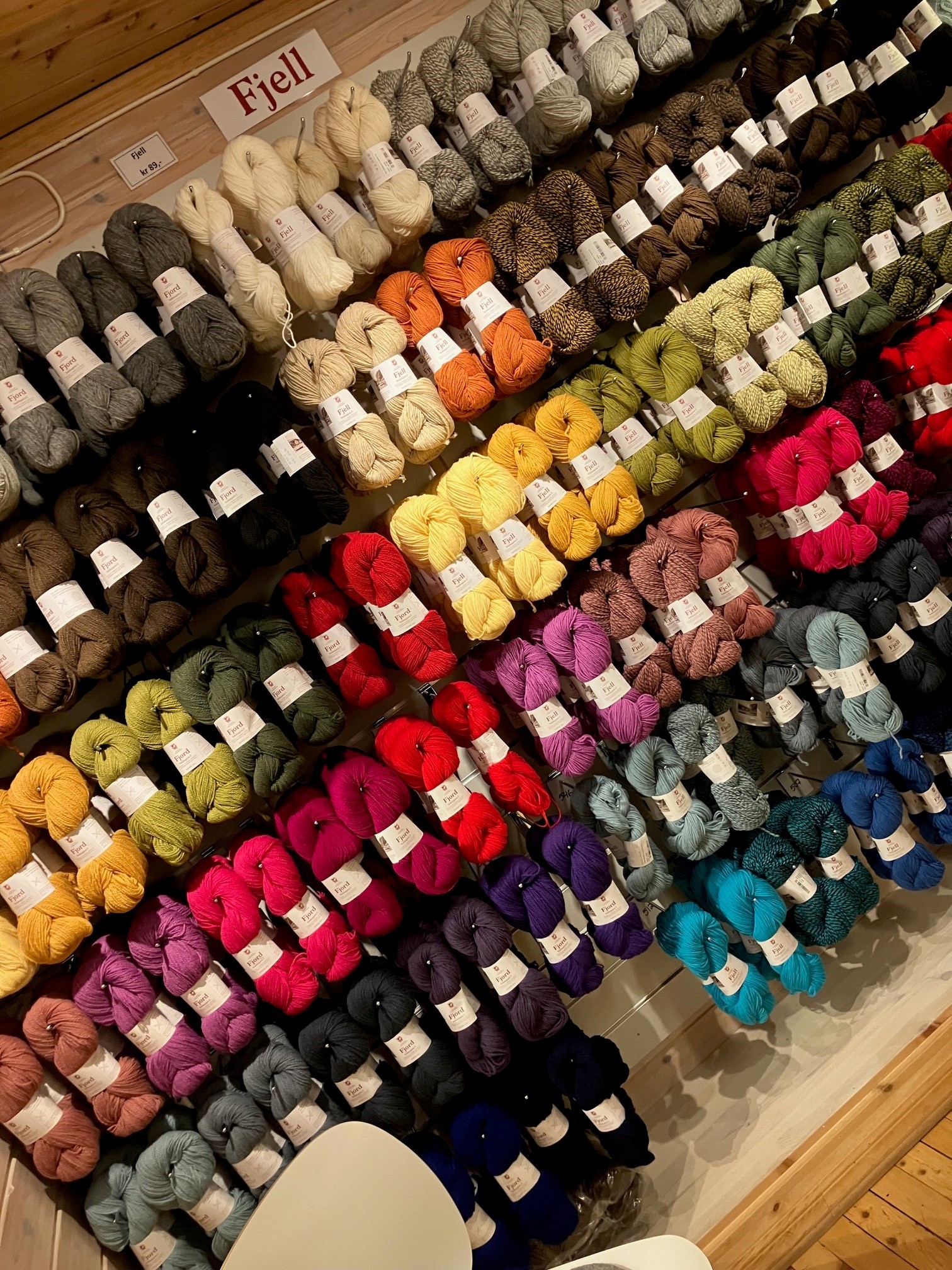
I found the yarn colours interesting in Norway. There were so many bold solid colours, something I didn’t expect. I’m talking hot orange and cobalt blue. At the time, the mega bright sock yarns were a bit garish for me, however, if when I go back, I would like to explore these stand-out colours. Other yarn colours I came across were marled and twisted (images below). The only thing I couldn’t find from Norwegian produced yarn was variegated. Perhaps this is more akin to acrylic production? Or the Norwegian’s are so good at colour work they don’t need variegated!


Brands
Lots of ‘big brands’ come to mind for UK yarn suppliers, however, I was not familiar with Norwegian brands before I went. We actually had a tour to the Hillesvåg factory in Bergen and this brand is available all over Norway. I got the impression it is a well loved and respected brand, producing good quality wool for over 100 years. I could put a photograph of inside the factory, but I thought you’d much prefer to feast your eyes on a video I took of just one of the wool shops at the factory. If you are going on a future cruise, then certainly take note to save your pennies for this occasion.
Another main brand seemed to be Sandnes Garn. I liked that they produced a lot of different colours, wool types and textures. I bought some very affordable balls of wool to make a blanket: the theme is country cottage colours (with a pop of turquoise).
Norway also had important brands, notably from Denmark, Peru and the UK (Rowan from the UK).

Shapes
This may seem a strange one, but I know some of you can be particular about how your yarn is wound (at the moment I am reaching for already wound balls of wool). The aforementioned Hillesvåg yarn always comes in hanks, so this is something to think about if you love making yarn cakes (I do!) or if you have the equipment (or a willing person/chair) to do so. Sandnes Garn always seemed to come in pre-wound balls. Peruvian wool I purchased was in doughnut form and skein form. Again, Norway has wool to suit everyone!


Cost
This is my favourite category because it was such a lovely surprise. Ok, so everything in Norway is super expensive: I paid £5 for a Daim bar! I lost my gloves on the first day, which really isn’t like me, and they were 50 quid in the shops! As you can imagine, I opted for cold hands and speed knitting for the fortnight ahead.
Yarn, on the other hand, I found to be very affordable compared to Norwegian goods and UK wool. Hoorah! The image of the blanket wool above, cost around £2.50 each when converted. I usually spend £50-60 in the UK on wool to make a jumper and in Norway I was spending around £35-40. Get in! Either that, or I’m recalling how much I told my mum things cost hmm…
Weights
Here I’m talking about the thickness of the yarn. In the UK yarn comes in 4ply (2.5-3.5mm needles), Double Knit (4mm) Aran (5mm), Chunky (6mm) and Super Chunky (8-10mm). In the US the yarn weights are in between the UK-nightmare! For instance, sport weight is approximately 3mm needles and worsted is 4.5mm. It makes buying non-British knitting patterns a bit of a pain when we have a very limited range of continental yarn available to purchase.
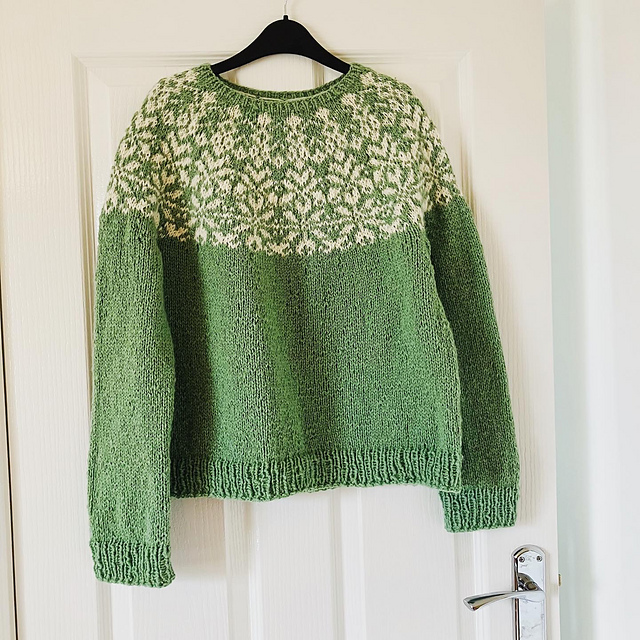
No surprises that Norwegian yarn covers every single weight you could possible imagine. For example, the wool I purchased for this jumper was for 4.5-5mm needles, thus a worsted/aran weight. Norwegian yarn weightings make it so much easier to knit any pattern. I’m a little too cautious to use aran for a worsted pattern, in case it turns out too big, so Norway really saved me here by having a blend of UK and US weights.
Shops
There are plenty of independent yarn shops in Norway, of the ones I went to I will particularly highlight Fru Kvist and Strikkedilla in Oslo and Norwegian Spirit in Bergen (of course Norway has a yarn shop in a train station!). As for what I’d describe as ‘high street’ shops, there is Husfliden. This is where Norwegians go to buy their traditional Bunad and there is one in every major town/city, but best of all each one has a yarn and haberdashery section! The one in Oslo is huge and in the basement of a shopping centre. It’s nice to experience all kinds of textiles in the Husfliden shops.
There is a chain of shops called Panduro, which reminded me of hobby craft. I went to one in Oslo and in Bergen. I hadn’t seen this in my pre-trip research, so certainly an extra surprise. This shop sold children’s crafts and jewellery making, in addition to miniatures and ‘glueing and sticking’ crafts. Really sweet. Fear not, there was a wool wall and I’d say this is similar to Hobbycraft at home. There wasn’t the brands wool I have mentioned earlier, rather imported or spun outside of Norway. If you like cotton yarn, then definitely come here as there isn’t a great choice in the aforesaid yarn shops. Panduro does have a selection of acrylic, literally the only place in Norway. I liked this shop and would certainly seek it out next time.
Must have hints and tips
Ok, here are the most exciting or most necessary tips for yarn shopping in Norway – you decide which is which! My favourite is the very last one.
1. Oslo Husfliden has a loyalty scheme. When you bought 9 balls of yarn, you got one free! Literally the best thing ever and I won’t disclose how many cards I completed in a single visit. Here is my incomplete card I shall be saving for future. Oslo Husfliden also had a schemed whereby if you had bought too much yarn for a project, and had not used it, then you could take it back for a refund/exchange. This is fabulous! How many times have you wasted money because you bought too much, or the pattern used less than you thought. A good example is recently I used Lettlopi wool to make this jumper by TinCanKnits. I got the right meterage and had about half the wool left! Tank tops incoming…


2. Another money saving tip is that shops can give you a form after a purchase. Then you do your own bit of form filling and present to the airport where you can get the VAT returned. Some people had $200 back in cash! I chose not to do this, however, as you have to be able to prove your purchases if asked and knew my 8kg of yarn was getting checked in. I’m also not good under pressure, getting hot, trying to faff finding things in my bag. The thought of it made me flap. But, if you have a more controlled and sensible trip then your purchases may be a little easier to access and you can consider looking into the tax return forms.
3. The shop opening times were very strange to me. In the capital city, shops closed way earlier than the UK and this was on a Saturday. Very odd. Sundays and Mondays there is not a sausage open, literally just McDonalds. Other days shops open around 10/11 am and close in the evening. There are some expectations, but it is worth planning what closes and when. Don’t forget to have a lie in: we were out in Ålesund bright and early and I thought there was an apocalypse, there wasn’t but the shops did only open at 11am. It was a ghost town until then.
4. In times of a cost of living crisis in the UK, it was appreciated that shops had the heating on. Perhaps the subtropical temperature not so much. It was February and -1 deg C outside and I was well prepared with my M and S thermals; then I went into shops and truly felt sick on numerous occasions. The Norwegians really love the heating being on. So, your choices are a quick nip in and out of shops, or ditch the layers and bare being cold as you dash to the next yarn shop! Sweaty elbows and knees hasn’t been my best look.
5. I feel actually taking the wool home is worth a mention. I was prepared and brought a packable zipped bag for my wool on the journey home. On the first day I surpassed this! The only reason I didn’t panic is because pretty much everyone was in the same situation. Some went and bought suitcases in Bergen, however I had the amazing idea (and I will say so myself!) of a laundry bag. It’s cheap, has a zip and can be folded away. I bought mine in a Wilkonsons-esque shop in Bergen.
6. Saving the best tip for last: half-hanks. Most shops, including the Hillesvåg factory, will sell you half-a hank (which also costs half as much) and put the rest back on the self. This is barmy but also amazing as it saves money and storage. I love the Norwegian ethos of only getting what you need. I, however, am British and didn’t want to be a bother so did not ask for this service. I would certainly try to pluck up the courage next time. This is yarn from a sock kit I bought, but this also demonstrates a 100g hank and 2x half hanks.

Well, I hope you enjoyed my experience of yarn shopping in Norway. Most of all, I hope you learned something. Please do consider following our blog or YouTube. It really helps us out and I plan on sharing more woolly adventures in the New Year.
Take care, Rachel G x
 Little Miss Drop Stitch